Fortsätt till huvudinnehåll

How Britain looks after its brave boys

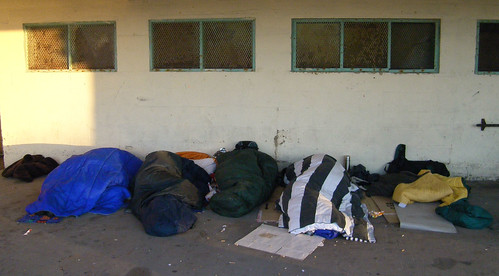
Britain's Brave Boys

These homeless men sleeping out under the promenade at Brighton are all ex-soldiers of various ages. They have served in places like Northern Ireland, the Falklands, and the Gulf. Once they left the army they found it impossible to settle into civilian life and ended up homeless. They have a drink problem but clean up as best they can afterwards. They are probably "institutionalised".

A significant proportion of homeless men are ex-servicemen. The official attitude seems to be that they are no longer of use and can be discarded.  I think the problem is that the sort of accommodation that would be right for them simply does not exist. I get the impression that they would not get on well in, for instance, a bed-sit flat, which is what they would probably get offered, after which they would be forgotten about as a solved case. These men need a structured environment, where ex-servicemen can live in a protected community, under firm direction

What might be done? In the seventeenth century, Chelsea Hospital was founded for just this purpose. Isn't there a need for similar institutions today? I have in mind large houses with 15 to 20 rooms and communal facilities such as a dining room, lounge, games and hobbies rooms, and a gymnasium run by a well-organised retired sergeant type who was kind, sympathetic but firm.

Residents in the kind of establishment I envisage would be expected if possible to help in the running of the establishment by taking turns with household tasks like cooking and cleaning, painting, decorating and household tasks. To judge from the way they conduct themselves, most of them would be well able to do such things as a product of their army training.

In such an environment, some of them at least might be able to give up their alcohol habits and possibly hold down regular work and become valuable members of their local communities.

This is really something that the government should take on as part of a duty of care to those who choose to risk their lives to defend the country, but if it will not, there is a need for a new charitable foundation. It would undoubtedly qualify for Royal patronage and enjoy huge public support.

Come on, you tabloids, speak up for our brave boys after their military usefulness is past.

Kommentarer

Populära inlägg i den här bloggen

The Zombie Train that refuses to die

The Guardian has published a couple more articles against HS2, one by specialist rail commentator Christian Wolmar, and another today by journalist Simon Jenkins. The main arguments in favour will doubtless be wheeled out by the commentators: the need for capacity and the disruption caused by upgrading existing routes. HST itself will severely disrupt services to Euston during the construction period. Capacity can be increased at a fraction of the cost by a variety of measures, provided that it is accepted that the additional traffic will run at existing speeds. It is not generally known that the Midland main line is, or was, four track all the way from London to Trent Junction, between Nottingham and Derby. This is because the additional tracks are separate, having been added for coal trains which trundled down to Brent sidings, on the edge of London, from a collection point at Toton in Nottinghamshire, where the Midland Railway build a huge marshalling yard. Beyond Derby, the main l...

Importing people to sustain demand

I got involved in a discussion with a Youtuber called “Philosophy all along”. This was in connection with criticism of Trump’s policy of deporting illegal migrants, which he argued would be bad for the economy as it would reduce demand. This implies that there is a need to import people to sustain demand. There is no obvious reason why a population should not be able to consume everything that the same population produces. If it can not, then something else is going on. It is a basic principle that wages are the least that workers will accept to do a job. Wages are a share of the value added by workers through their wages. The remainder is distributed as economic rent, after government has taken its cut in taxes. Monopoly profit is a temporary surplus that after a delay gets absorbed into economic rent. Land values in Silicon Valley are an example of this; it's like a gold rush. The miners get little out of it. Rent and tax syphon purchasing power away from those who produce the g...

Beyond electrification

In an earlier post I suggested a core list of lines which ought to be in an electrification programme spread over twenty years of so. This leaves a residue of routes which it is unlikely will ever be electrified. This include for example All lines beyond Glasgow, Stirling and Aberdeen All lines west of Exeter and Swansea All lines west of Chester Shrewsbury - Chester Everything not listed in my previous blog - electrification plans only scratch surface   Some of these routes carry main line services to London and other cities on parts of the network that are already electrified or included in electrification plans. Others are self contained and others carry light traffic - less than a dozen trains a day. The current plan is that main line services will be operated with the hybrid trains on order from Hitachi, but this is a costly, wasteful and ineffective solution. The performance of the trains will be inferior to the present Inter-City 125 trains on non-electrified lines and the ...