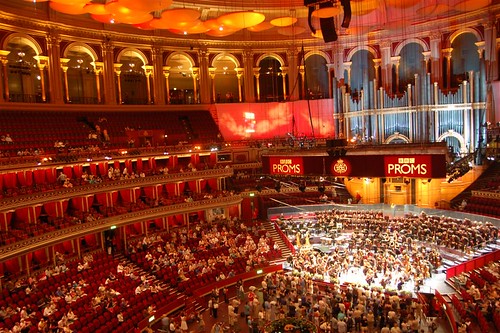
The row over the inaccessibility of the Proms was strange. Would it be too far-fetched to imagine that Culture Minister Margaret Hodge was set up?
If working class children are being cut off from what in Japan is referred to by the useful descriptive term “Western Art Music”, a major part of the blame must be placed on schools which have dumbed-down the music curriculum. This has come about as middle class teachers have come to belief that working class culture should be given its place, and that it is somehow demeaning and oppressive to promote middle class art forms.
Formerly, many children were exposed to classical music though religious education, but the traditional hymns that were current fifty years ago have been largely replaced by banal, folk-style tunes. Catholic children were particularly privileged, as they were routinely taught Gregorian chant out of the book called “Plainchant for Schools”, and could encounter the best of sixteenth century polyphony in regular liturgical use.
It is unfortunately the case that teachers and clergy often believe that such music is too difficult for the younger generation. If the established classical music repertoire is inaccessible to working class people, it partly because, for dubious reasons - a misplaced notion of egalitarianism - educationalists have made insufficient effort to expose working class children to this kind of music.
The Guardian has published a couple more articles against HS2, one by specialist rail commentator Christian Wolmar, and another today by journalist Simon Jenkins. The main arguments in favour will doubtless be wheeled out by the commentators: the need for capacity and the disruption caused by upgrading existing routes. HST itself will severely disrupt services to Euston during the construction period. Capacity can be increased at a fraction of the cost by a variety of measures, provided that it is accepted that the additional traffic will run at existing speeds. It is not generally known that the Midland main line is, or was, four track all the way from London to Trent Junction, between Nottingham and Derby. This is because the additional tracks are separate, having been added for coal trains which trundled down to Brent sidings, on the edge of London, from a collection point at Toton in Nottinghamshire, where the Midland Railway build a huge marshalling yard. Beyond Derby, the main l...
Kommentarer